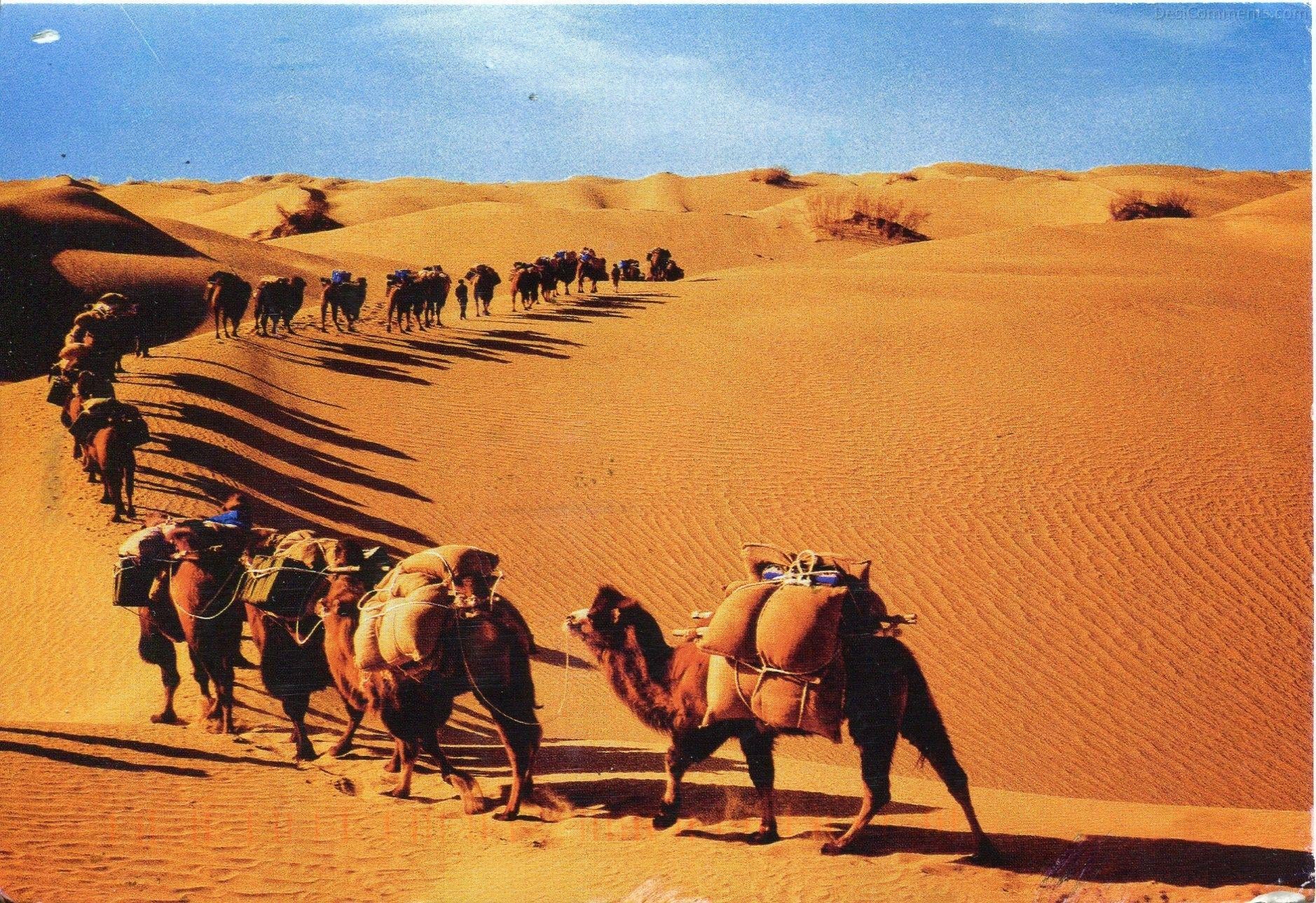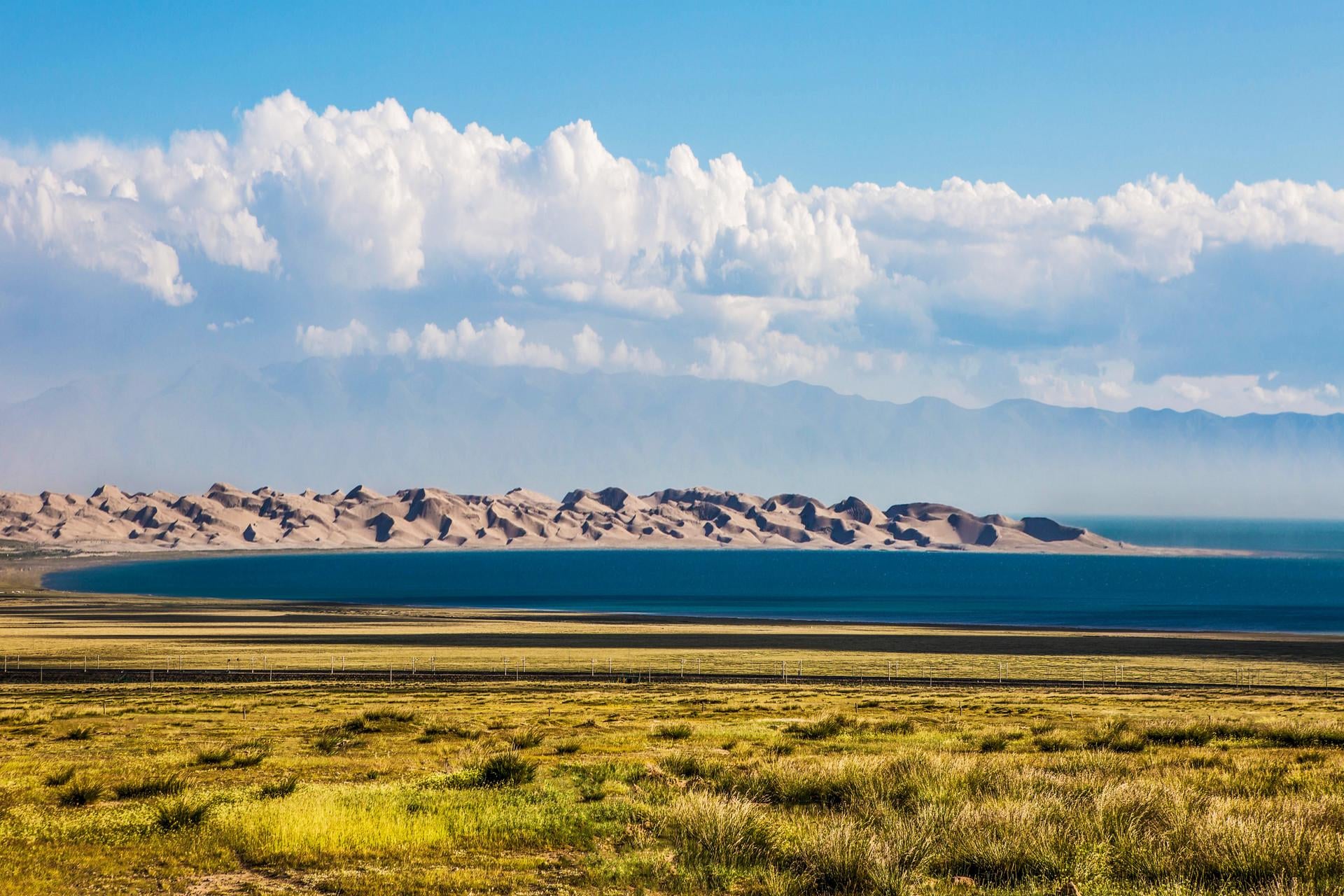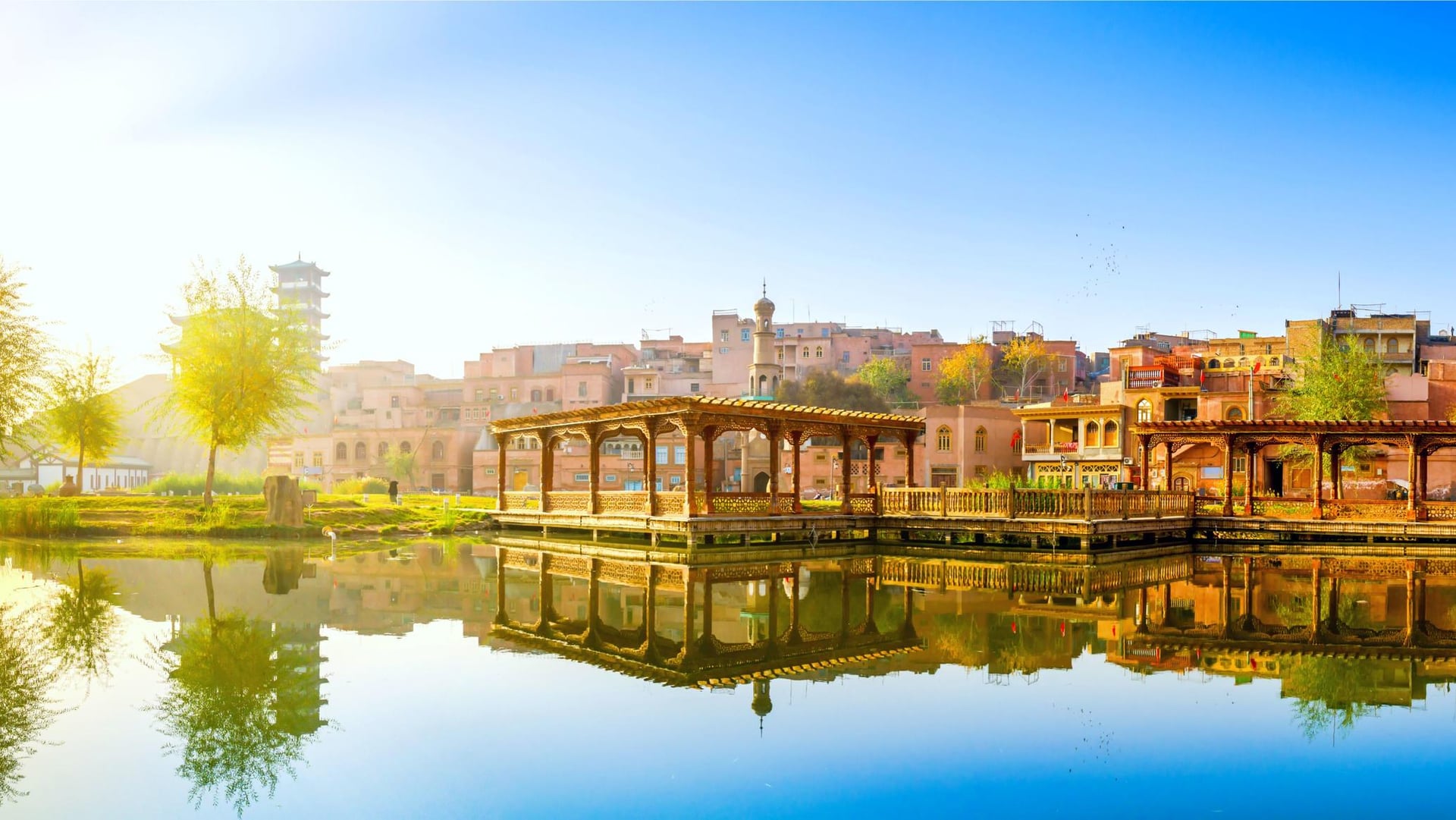
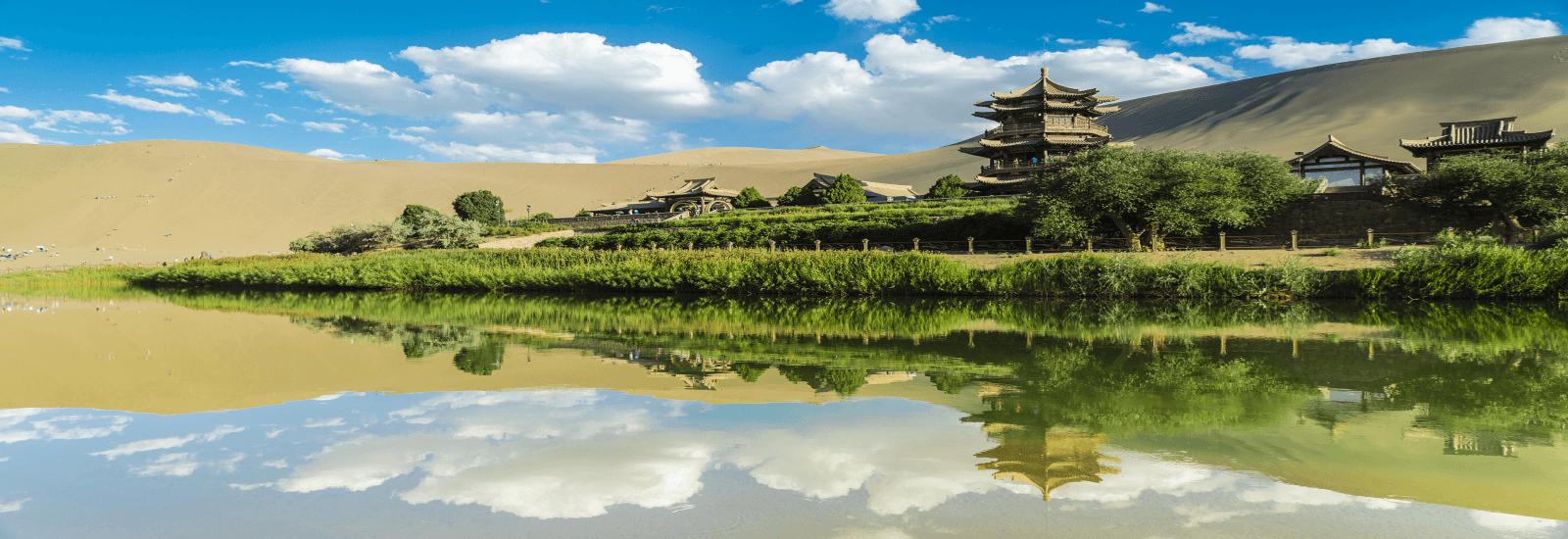
Do you dream of walking in the footsteps of merchants and explorers who shaped history? The Silk Road beckons you on an epic tour through time! This ancient network of trade routes was the world's first global marketplace, where caravans carried silk, spices, and ideas between East and West. Today, you can trace their path through oasis towns with bustling bazaars still fragrant with dried fruits and spices, sleep under stars that guided camel trains centuries ago, and run your hands along weathered fortress walls that once protected kingdoms. From the echoing canyons of the Hexi Corridor to the golden dunes of the Taklamakan Desert, every mile tells stories of Buddhist monks, Persian traders, and Mongol warriors. Come feel the enduring pulse of connection that made this route legendary—where every sunset still gilds the sands with the same golden light that inspired countless travelers before you.
Table of Contents
Imagine walking in the footsteps of ancient traders, explorers, and storytellers—that's what the Silk Road is all about! It wasn't just one road, but a whole web of paths linking East and West for centuries. From China's Tang Dynasty to the great empires of Persia and beyond, this legendary route carried silk, spices, ideas, and cultures across deserts, over mountains, and through bustling cities.
Today, traveling the Silk Road means uncovering layers of history, meeting warm and welcoming people, and experiencing landscapes that haven't changed much since camel caravans passed through. Whether you're exploring ancient ruins, tasting flavors passed down through generations, or simply soaking in the wide-open beauty of deserts and grasslands, this tour feels like stepping into a living storybook.
Ready for an adventure that connects you to the past while showing you the vibrant cultures of today? The Silk Road is waiting!
2. How to Travel the Silk Road
Ready to follow in the footsteps of ancient merchants and explorers? Here's how you can travel the Silk Road like a pro while soaking up all its wonders.
The classic route takes you from Xi'an, where the tour begins, all the way to Kashgar near the Pakistan border. Start in Xi'an to see the Terracotta Warriors, then head west to Dunhuang for its breathtaking desert caves. Next stop is Turpan, where grapevines and ancient ruins await, before continuing to Urumqi as your gateway to Xinjiang's culture. Finally, reach Kashgar—the heart of Central Asian traditions—with its famous Sunday Market and old-world charm.
Getting around is easier than you think!
- Flying works well for long distances—you can catch flights between major stops like Xi'an, Dunhuang, Urumqi, and Kashgar.
- High-speed trains comfortably connect Xi'an to Dunhuang (with stops like Zhangye and Jiayuguan along the way), offering scenic views of the countryside.
- For remote areas like Southern Xinjiang's deserts and mountain towns, hiring a private car or 4WD with a local driver is your best bet. They know the roads and can take you to hidden gems.
- If you love road trips, self-driving through Northern or Southern Xinjiang is an epic experience—just be prepared for long distances and make sure you're comfortable with local driving conditions.
A few tips to make your trip smoother:
- Book trains and flights in advance during peak seasons (May-October).
- In smaller towns, buses and shared taxis are common for short distances.
- Allow extra time—some routes pass through stunning landscapes you'll want to stop and explore.
- Talk to fellow travelers and locals—they often have the best advice for getting around!
Whether you choose to fly, ride the rails, or hit the open road, the Silk Road is all about the tour as much as the destinations. Take your time, enjoy the ride, and let the adventure unfold!
3. Best Time to Travel the Silk Road
Spring (April-May)—Nature's Reawakening
Watch the Silk Road come back to life after winter! In Xi'an, cherry blossoms decorate the ancient city walls, while Dunhuang's desert begins to warm up—perfect for exploring the Mogao Caves without summer crowds. The mountains around Tashkorgan start melting their snow, creating gushing streams that feed green valleys. Pack a light jacket for cool mornings and enjoy sunny afternoons ideal for wandering through Kashgar's lively markets.
Summer (June-August)—Lively and Bright
Embrace the energy of peak travel season! Turpan's grape vines hang heavy with fruit (don't miss the sweetest melons you'll ever taste), while evenings bring outdoor concerts in the grape valleys. Up in Tashkorgan, summer is trekking season—meet Tajik herders leading their flocks to high pastures. Yes, some desert areas get hot, but that's when you'll appreciate Samarkand's shaded courtyards and fountains. Just start early to beat the heat, and relax with an iced sherbet (traditional fruit sorbet) in the afternoon.
Autumn (September-October)—Golden Perfection
Many say this is the absolute best time to travel. The Silk Road becomes a golden paradise—imagine Dunhuang's poplar trees turning bright yellow against red desert cliffs. Kashgar's bazaars overflow with fresh walnuts, pomegranates, and just-picked cotton. The weather? Perfect for hiking to remote ruins near Turpan or photographing Samarkand's blue domes under crisp blue skies. Pack layers for warm days and cool nights, and join locals celebrating harvest festivals with music and dancing.
Winter (November-March)—Quiet and Mystical
For those who don't mind cooler temperatures, winter reveals a different magic. Picture Bukhara's medieval streets dusted with snow, the morning call to prayer echoing through misty alleys. You might have Jiayuguan Fort (where the Great Wall ends) almost to yourself! While some mountain passes close, cities like Kashgar remain lively with indoor teahouses serving spiced tea and steaming lamb soups. The bonus? Hotel prices drop, and you'll experience authentic local life without tourist crowds.
Visa & Documents
Before packing your bags, take time to research visa requirements for each country along your Silk Road tour. Some destinations offer convenient visa-free entry or simple e-visa options for short visits, while others require applying weeks in advance. Your passport will be your most important travel companion—keep it secure in a money belt or hotel safe. You'll need to show it frequently at hotels, train stations, and border crossings, so make color copies and store digital backups just in case.
Transportation
The magic of the Silk Road is in the tour itself! Long-distance trains offer a comfortable and scenic way to travel while giving you chances to meet interesting fellow travelers. In cities, inexpensive local buses and shared taxis (called "marshrutkas" in some areas) are great options—just remember to negotiate fares before getting in. For remote destinations, shared minivans or hiring a private driver with good recommendations can be your best bet—ask at your hotel for trusted contacts.
Money Matters
While credit cards work in major hotels and restaurants of big cities, cash remains essential—especially in small towns and rural areas. Stock up on local currency in cities where ATMs are reliable, and always carry small bills for markets, roadside stalls, and tipping. A helpful tip: notify your bank about your travel plans to prevent card freezes when making foreign transactions. Consider bringing some US dollars or euros as emergency backup—they can be exchanged almost anywhere.
Language & Communication
As you cross borders, you'll encounter Mandarin, Russian, Persian, Turkic languages, and countless local dialects. While you can't learn them all, mastering a few polite phrases ("hello," "thank you," "how much?") in each language will earn you smiles and better service. Download Google Translate with offline language packs before your trip—it's invaluable for deciphering menus, signs, and having simple conversations. When in doubt, friendly gestures and patience go a long way!
Packing Smart
The Silk Road's dramatic landscapes mean you'll face scorching deserts, chilly mountain passes, and everything in between. Here's how to pack like a pro:
- Versatile clothing: Lightweight layers you can add or remove easily
- Broken-in walking shoes: You'll be exploring ancient streets and rugged trails
- Sun protection: Wide-brimmed hat, sunglasses, and high SPF sunscreen
- Reusable water bottle: Stay hydrated between stops (with purification tablets as backup)
- Basic toiletries: Include hand sanitizer and travel tissues—facilities vary widely
- Daypack: For carrying essentials during daily explorations
5. Top Destinations on the Silk Road
(1) Xi'an
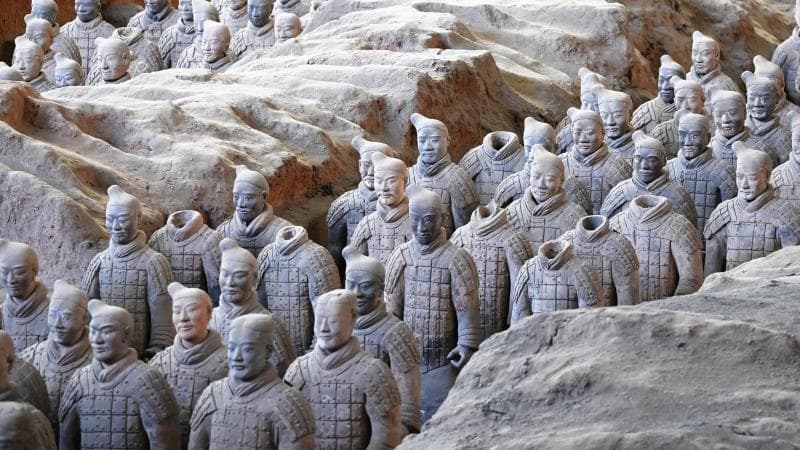
As the eastern terminus of the Silk Road, Xi'an stands as a magnificent testament to China's imperial past. The discovery of the Terracotta Warriors in 1974 revealed one of archaeology's greatest treasures—an entire army of over 8,000 life-sized soldiers, horses and chariots buried for 2,200 years to protect Emperor Qin Shi Huang in the afterlife. Each warrior's unique facial expression tells its own story, while the bronze chariots showcase astonishing ancient metallurgy skills.
Beyond the warriors, Xi'an's ancient city walls stretch for 14 kilometers, offering panoramic views of both old and new cityscapes. At the Shaanxi History Museum, exquisite Silk Road artifacts reveal how goods and ideas flowed between East and West. As evening falls, the Muslim Quarter comes alive with food stalls serving up regional specialties—watch as chefs stretch hand-pulled noodles with theatrical flair, or try the famous "burger" of shredded lamb stuffed in pita-like bread. The Great Mosque's peaceful courtyards, blending Chinese pagodas with Arabic calligraphy, symbolize Xi'an's multicultural heritage.
(2) Dunhuang
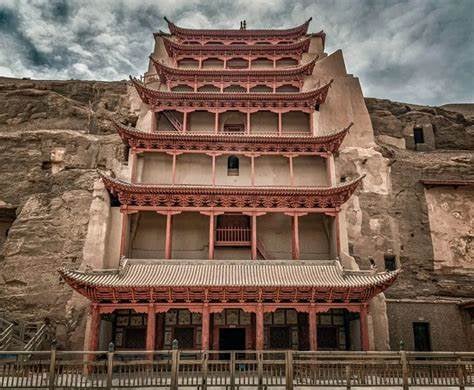
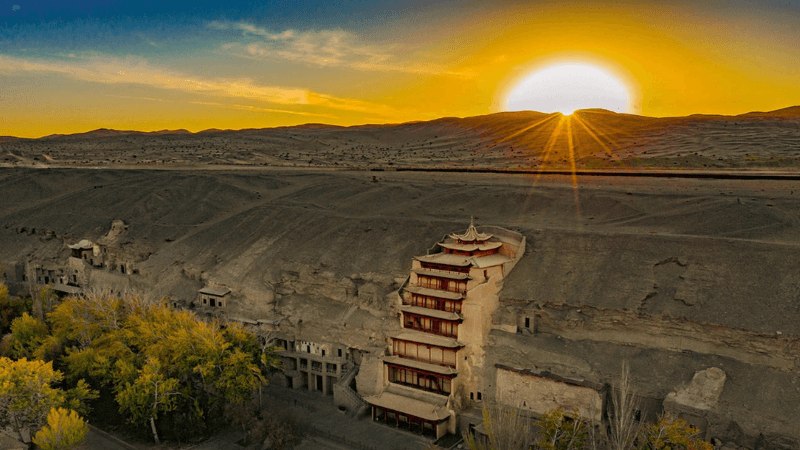
This remote desert outpost guards one of the world's most important collections of Buddhist art. The Mogao Caves, hidden in cliffs above the Dachuan River, contain 492 decorated grottoes with 45,000 square meters of murals and 2,000 painted sculptures. Some caves were sealed for nearly a millennium, preserving vibrant colors that still dazzle visitors today. Expert guides illuminate the stories behind these masterpieces—from celestial musicians to merchant caravans traversing the desert.
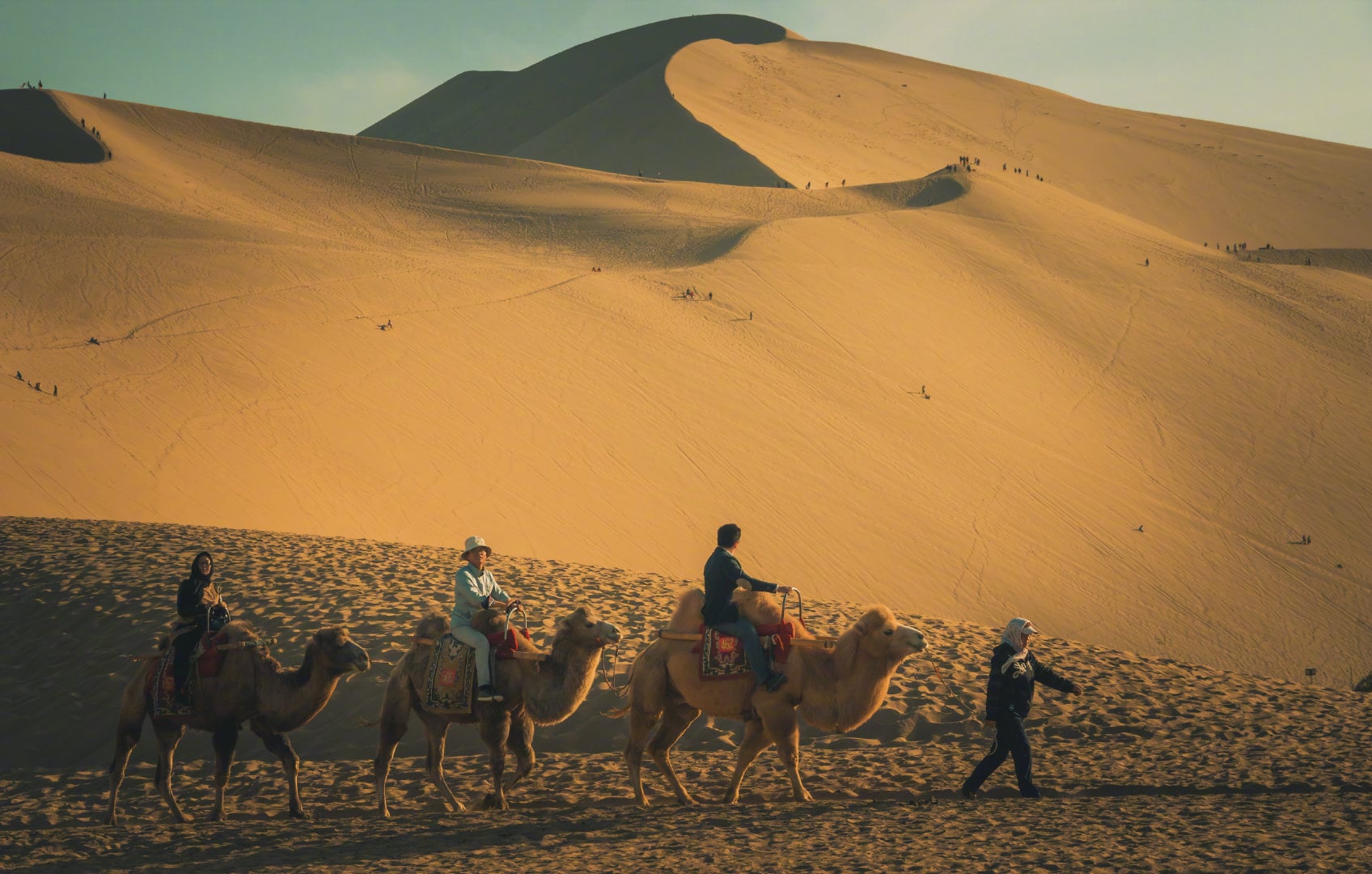
Just outside town, the Mingsha (Singing Sand) Dunes rise dramatically to 170 meters. Legend says these sands sing to commemorate a buried army, though scientists attribute the phenomenon to wind friction. For the best experience, climb the dunes at sunset when the shifting light paints the landscape in ever-changing hues. Nearby, Crescent Moon Spring appears like a mirage—a natural oasis that has never dried up despite being surrounded by desert for thousands of years. The new "Silk Road Dunjian" performance brings this history to life with hundreds of performers against the stunning desert backdrop.
(3) Turpan
Known as China's hottest and lowest basin, Turpan surprises visitors with its lush vineyards and ingenious ancient water systems. The Flaming Mountains live up to their name—their red sandstone cliffs seem to burn under the intense sun, inspiring one of China's most famous literary classics, "Journey to the West." Beneath this dramatic landscape lies the karez system, an underground irrigation network of wells and channels stretching over 5,000 kilometers—an engineering marvel comparable to the Great Wall.
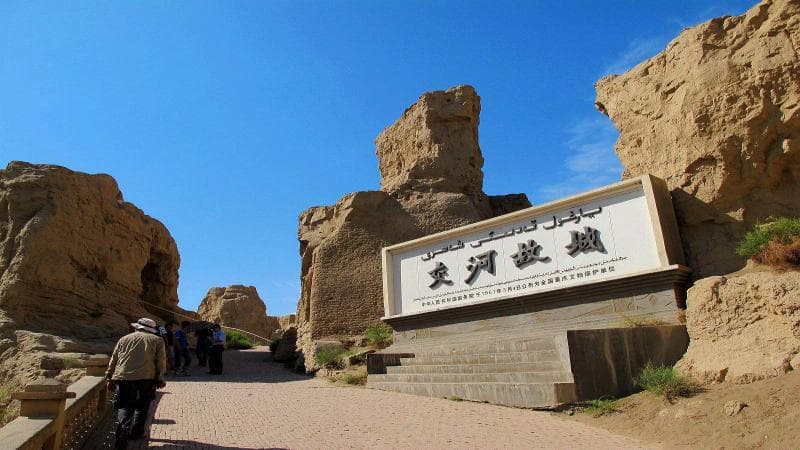
The ancient city of Jiaohe, built on a dramatic mesa between two rivers, showcases remarkable earthen architecture that has survived 2,300 years of history. Nearby Gaochang's ruins reveal how this former Silk Road capital blended Chinese, Persian and Indian influences. In grape season (July-September), the Grape Valley festival bursts with music, dance and endless varieties of fresh fruit. Don't miss trying Turpan's famous raisins dried in special clay rooms with ventilation holes—a technique unchanged for centuries.
(4) Kashgar
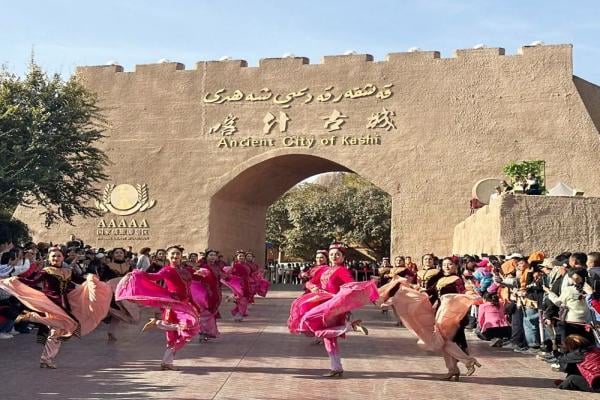
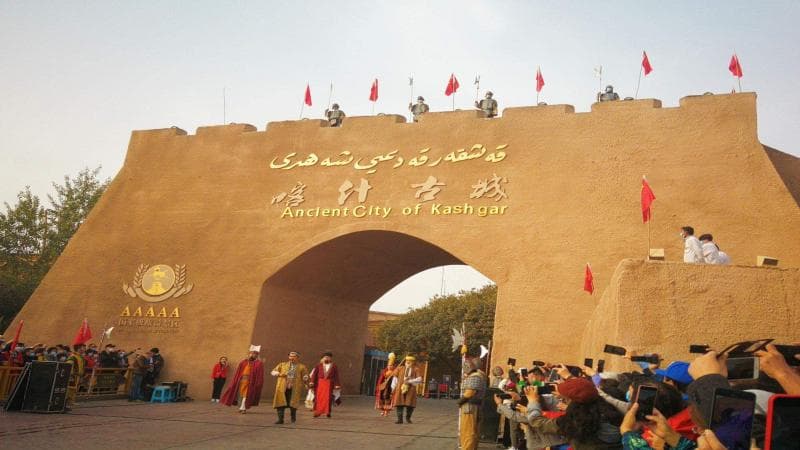
Kashgar's Old City transports you back to medieval Central Asia, with its maze of narrow alleys, traditional courtyard homes and bustling workshops. The Sunday Bazaar remains one of Asia's most spectacular trading scenes—imagine thousands of farmers arriving by donkey cart to sell spices piled in colorful pyramids, hand-woven carpets, and fat-tailed sheep that are paraded like prized possessions. In the metalworking quarter, the rhythmic hammering of coppersmiths echoes through covered streets where light filters through wooden lattices.
The Id Kah Mosque, China's largest, dominates the central square with its yellow walls and towering gatehouse decorated with intricate Islamic patterns. Nearby, the Abakh Khoja Mausoleum (Fragrant Concubine's Tomb) tells the romantic story of a Uyghur woman who became an imperial consort. For authentic local experiences, visit a family-run bakery to see how traditional nan bread is baked in tandoor ovens, or join a home-hosted dinner featuring pilaf (polo) cooked in massive cauldrons. The surrounding countryside offers stunning views of the Pamir Mountains, where some villages still maintain traditional ways of life unchanged for generations.
(5) Tashkorgan
This remote Tajik county near the Pakistan border offers some of the Silk Road's most dramatic landscapes. At over 3,000 meters elevation, Tashkorgan's stone houses with flat roofs (used for drying crops) blend seamlessly into the rugged terrain. The local Tajik people, with their distinctive embroidered caps and warm hospitality, maintain traditions dating back to when this was a key stop for caravans crossing the Pamirs.
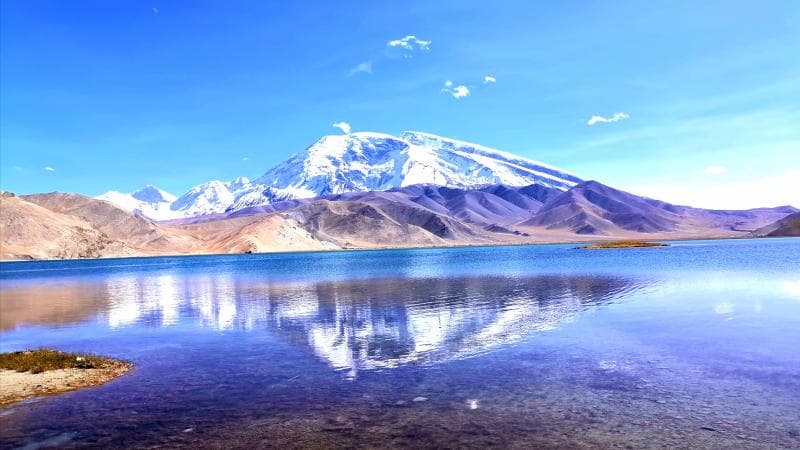
The ancient stone fortress overlooking town hints at Tashkorgan's strategic importance as a Silk Road garrison. Nearby Karakul Lake, nestled at the foot of Muztagh Ata ("Father of Ice Mountains"), creates mirror-like reflections of the 7,546-meter peak—considered one of the world's most beautiful alpine scenes. Stay in a traditional yurt camp to experience nomadic culture firsthand, complete with butter tea and stories told around the stove. The Khunjerab Pass, marking the modern border with Pakistan, offers breathtaking high-altitude vistas where snow leopards still roam wild.
(6) Samarkand
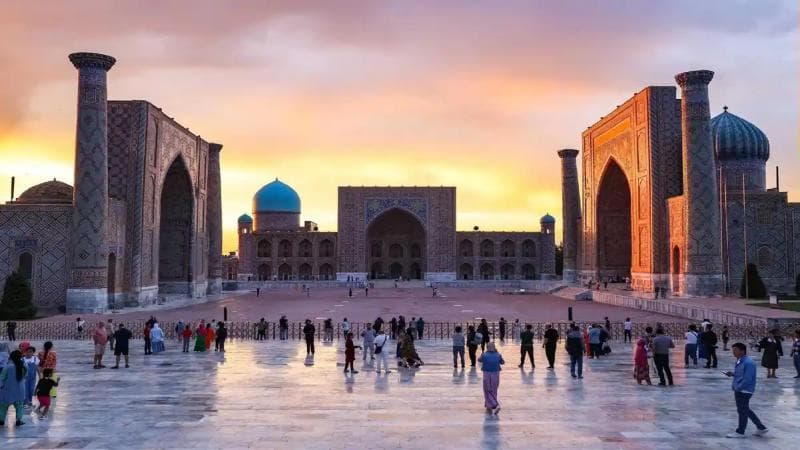
Uzbekistan's crown jewel overwhelms visitors with its architectural splendor. Registan Square's three madrassas (Islamic schools) form what many consider the world's most beautiful public space—the intricate blue mosaics of Ulugh Beg Madrassa (15th century) contrast with the later, more ornate Sher-Dor and Tilya-Kori madrassas. At sunset, when the fading light makes the tiles glow, you'll understand why this city inspired poets for centuries.
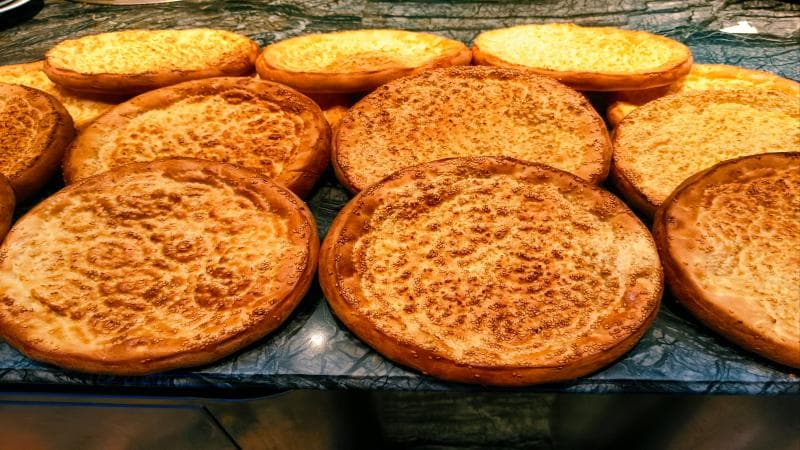
The Shah-i-Zinda necropolis is a stunning "street" of mausoleums where the play of light on turquoise tiles creates an ethereal atmosphere. Each building tells a story—from the 11th-century tomb of Qusam ibn Abbas (cousin of the Prophet Muhammad) to the 14th-century resting places of Timur's female relatives. Don't miss the enormous Bibi-Khanym Mosque, whose ruined grandeur hints at its former status as one of the Islamic world's largest mosques. The nearby Siyob Bazaar bursts with fresh produce—try the legendary Samarkand non bread, baked in traditional tandoor ovens and stamped with beautiful patterns.
(7) Bukhara
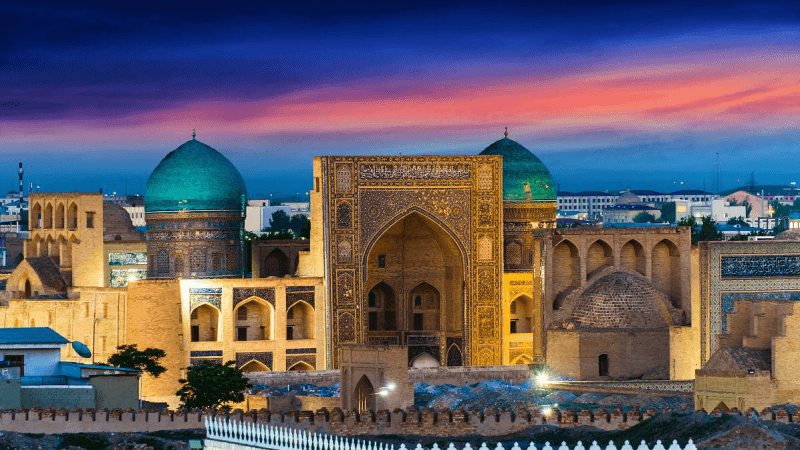
This perfectly preserved medieval city contains over 140 architectural monuments spanning a thousand years of history. The Kalyan Minaret, standing 47 meters tall, has watched over Bukhara since 1127—so impressive that even Genghis Khan spared it from destruction. Climb to the top for panoramic views of the old city's sea of domes and courtyards. The adjacent Kalyan Mosque's vast courtyard could hold 10,000 worshippers in its heyday.
Bukhara's covered bazaars (tokis) still buzz with artisans practicing centuries-old crafts. Watch master weavers create silk carpets using natural dyes, or metalworkers hammering intricate copperware. The Lyabi-Hauz complex, centered around a 17th-century pool, offers shady teahouses perfect for people-watching. For unique souvenirs, visit a miniature painting workshop where artists preserve traditional Persian techniques. As night falls, the illuminated monuments create a magical atmosphere—don't miss the Nadir Divanbegi Madrassa's striking facade featuring two golden suns with human faces.
Sit at a bustling market stall, the air thick with the scent of sizzling lamb and warm spices. This is where the Silk Road comes alive—not just in ancient ruins, but on your plate. Every bite tells a story of traders, travelers, and the cultures that mingled along this legendary route.
Start with hand-pulled noodles, stretchy and chewy, swimming in a rich broth with tender beef or lamb. Watch as the noodle master twists and pulls the dough like magic, just as cooks have done for centuries. Then try golden samsas, flaky pastries stuffed with spiced meat or sweet pumpkin, their crusts crisp from the clay oven.
Don't miss the grilled skewers—chunks of juicy lamb rubbed with cumin and chili, charred over glowing coals. Pair them with round flat breads, still warm and dotted with sesame seeds, perfect for tearing and sharing. For something refreshing, sip on pomegranate juice, pressed fresh before your eyes, or cool down with a bowl of creamy yogurt drizzled with local honey.
In the oasis towns, you'll find pilaf rice, fragrant with carrots, raisins, and slow-cooked meat—a dish that fueled countless caravan travelers. And as you wander the night markets, let the sweet smell of nut-filled pastries or rose-flavored ice cream draw you in for one last treat.
This isn't just food—it's a taste of history. Every spice, every flavor, is a reminder of the people who crossed deserts and mountains to bring these recipes to life. Come hungry, and leave with stories of your own.
Do I need visas for the Silk Road?
It depends on which countries you're visiting. China requires visas for most travelers, while Central Asian countries like Kazakhstan and Uzbekistan offer e-visas or visa-free entry for many passports. Always check requirements 2-3 months before your trip—your nearest embassy or their official website will have the latest info.
Is Xinjiang safe to visit?
Yes, Xinjiang is generally safe for travelers. You'll see more police presence than other parts of China, but this means extra security rather than danger. Local Uyghur people are famously hospitable—just use common sense like you would anywhere, and avoid sensitive political discussions. The region's stunning landscapes and bazaars are absolutely worth visiting!
Should I join a tour or travel independently?
Both options work well! Guided tours are great if you want everything arranged and enjoy having cultural experts explain sites. Independent travel lets you move at your own pace and have more local encounters. If it's your first time, consider joining a short group tour for part of your trip, then exploring solo for the rest.
How long does the full Silk Road take?
Most travelers spend 2-4 weeks covering key highlights. You could rush through main cities in 10 days, but to really experience the route's diversity (and account for transport delays), 3 weeks is ideal. If you have 6+ weeks, you can include more remote areas and really soak up the atmosphere.
What languages will I encounter?
You'll hear Mandarin in China, Russian in Central Asia, plus local languages like Uyghur, Kazakh and Uzbek. English isn't widely spoken outside tourist hotels, so learn basic phrases and carry a translation app. Don't worry too much though—smiles, gestures and a phrasebook go surprisingly far!
Are you interested in this tour?
This tour can be tailored.
Tashkent-Urgench-Khiva-Bukhara-Samarkand-Tashkent
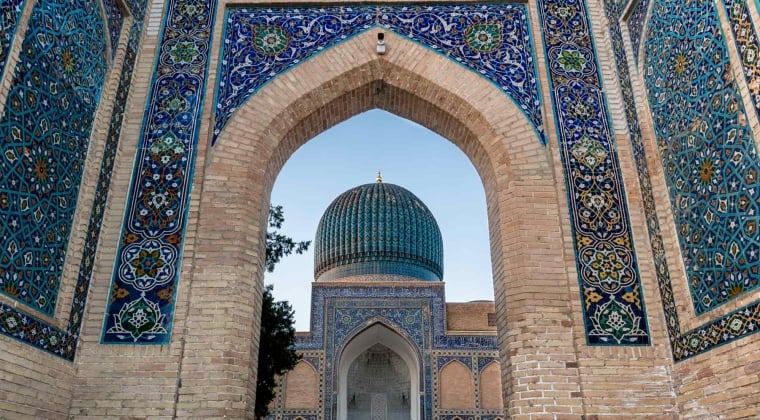
Embark on an 8-day journey through Uzbekistan's Silk Road gems: explore Tashkent's historic Khazrati-Imam Complex, wander the UNESCO-listed Ichan-Qala in Khiva, and marvel at Bukhara's Poikalon Ensemble. Ride the fast-speed Afrosiyob train to Samarkand's Registan Square, where Timurid architecture meets ancient paper-making traditions. Ideal for history lovers, this tour blends medieval cities, vibrant bazaars, and seamless transport, uncovering Central Asia's richest cultural tapestry.
China-Kyrgyzstan-Uzbekistan
This 20-day tour traces the Silk Road from Lanzhou's Yellow River to Uzbekistan's Registan Square—scaling Pamir highlands, deciphering Dunhuang's cave art, and marveling at Samarkand's turquoise domes.